
STUDENTS ARE ADAPTING, BUT SYSTEMS AREN’T
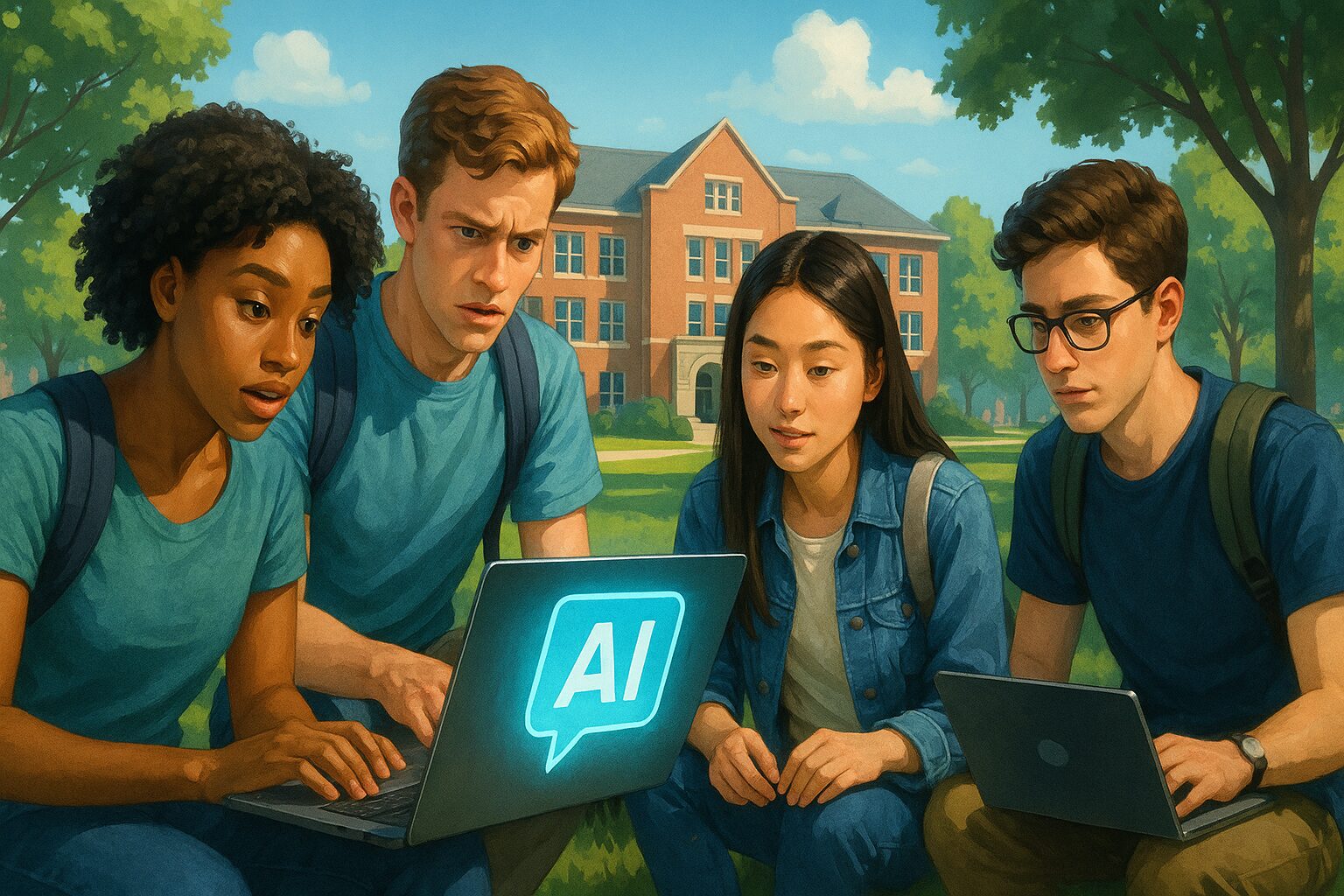
A few weeks ago, a high school teacher told me something that stopped me cold. She said her students are using AI tools faster than she can learn their names. She was not being dramatic. She was describing a reality that is spreading across classrooms nationwide.
The more I looked into the numbers, the clearer one truth became. The United States has opened the door to AI in education, but no one seems ready for what walked in.
THE GREAT AI RUSH INSIDE AMERICAN SCHOOLS
According to new federal data, 63% of U.S. public schools now use at least one AI tool. That part is not surprising. AI can personalize lessons, support special education, analyze reading patterns, and free teachers from repetitive tasks.
The alarming part is this: only 15% of those schools have any formal policy governing AI use. No guidelines. No oversight. No guardrails.
That gap leaves teachers improvising and students experimenting in a system that was never designed for this speed of change.
Key Problems Emerging Now
- Schools are adopting AI faster than they can update curriculum or assessments.
- Students are using AI for homework help that teachers cannot trace.
- Districts lack consistent rules on privacy, accuracy, and academic integrity.
This is not an education upgrade. It is an uncontrolled technology surge.
THE TRAINING PROBLEM NO ONE IS TALKING ABOUT
If AI is going to be a core part of the learning experience, teachers need training. Instead, 58% of teachers say they have received no preparation at all on how to use AI safely or effectively.
One educator quoted by the NEA summed it up:
“We are being asked to navigate a powerful tool with no map, no compass, and no training.”
Without teacher readiness, AI risks becoming a shortcut rather than a scaffold. It can widen learning gaps instead of closing them.

Key Areas Where Teachers Need Immediate Support
- How to spot AI generated work
- How to integrate AI ethically and creatively
- How to protect student data
- How to redesign assignments to preserve originality
Without this training, teachers are forced into a defensive position instead of an empowered one.
THE ACADEMIC INTEGRITY CRISIS IS ALREADY HERE
The concern is not hypothetical. The Center for Democracy and Technology reports that 72 percent of educators worry AI will increase cheating and plagiarism if assessment standards do not evolve.
Old assignments cannot survive new technology. If every student can produce a polished essay in ninety seconds, then the assessment must change.
This moment is similar to the arrival of calculators in math classrooms, but on a much larger scale. AI affects every subject, every grade, and every type of assignment.
Schools need to redesign assessments to measure:
- Critical thinking
- Process over product
- Source tracing
- Creation with accountability
If schools do not act, academic integrity will not erode slowly. It will disappear.
CONCLUSION
AI is not slowing down. Students are using it daily. Teachers are improvising. Administrators are trying to keep up. The technology is not the problem. The lack of preparation is.
The question is no longer whether AI belongs in the classroom. The question is whether schools can build the structure, standards, and training needed to handle it responsibly. If we get this wrong, we risk undermining both learning quality and student equity for an entire generation.
The solution is not to fear AI. It is to prepare for it with the same urgency that students are already using it.

While schools struggle with the pace of AI adoption, one truth stands out. The institutions that thrive in this new era are the ones that approach AI thoughtfully, with clear structure, intentional design, and real oversight. In the education world, this means using tools that support clarity instead of complexity. Campus Pixel gives colleges and universities a way to communicate faster, respond instantly to prospective students, and build trust in an environment where information is moving too quickly for traditional systems. As schools work to catch up, they can begin using AI responsibly today with tools that are built for transparency, security, and student success.